Contract software engineering
Tell me what you want to build.
A new app, a feature for the product you already run, a codebase that needs care, tests you can trust. I take on software engineering work of any size, from a first release to a second pair of hands on your team.
I’m Sharmin Sirajudeen. I run Drengr, a software company licensed in Abu Dhabi, and I write the code myself, with an AI coding setup I built, directly with whoever needs the software.
What I take on
Mobile apps
Native Android in Kotlin and Compose, native iOS in Swift and SwiftUI, or both from one Flutter codebase.
Web products
React and Next.js front ends, with typed APIs and the backend behind them.
Code rescue
Existing codebases stabilised, sped up and finished, without rewriting for the sake of it: crash and ANR root causes, performance, APK size.
Payment integration
Checkout.com, Adyen, Google Pay and KNET, from over a decade of shipping payments in production.
Tests and CI
End-to-end tests on real devices, automated build and release pipelines, and delivery to the app stores.
AI in your product
LLM features inside the product you already have, with measurements that show what they do.
What I have built
Actuator
Live
A single Rust binary that lets AI agents see a phone screen and act on it, on Android emulators, iOS simulators and cloud device farms.
Graspline
Free, in testing
A student pastes a textbook question on projections and Graspline draws the full construction, step by step, checking every measurement against the facts it read.
What do you want to build?
A few lines are enough: what it is, where it stands, and when you need it.
When a line of code cost a card.
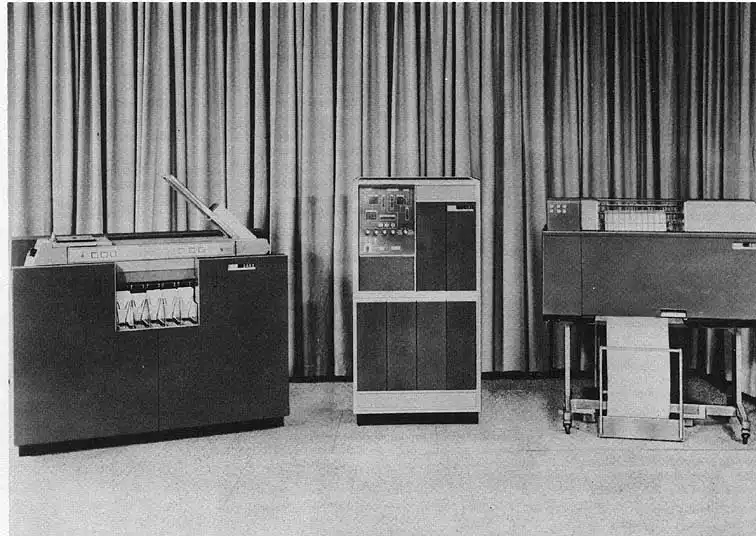
On a machine like the IBM 1401, a program was a deck of punched cards, one line to a card. You punched it on a keypunch, handed the deck in at the machine room counter, and waited. A typo cost a fresh card and another wait.
People who worked that way wrote less and checked more. I work the same way.
Four real lines of the Apollo 11 lunar module’s landing program, Luminary 099, comments and all: the programmer marked the first two TEMPORARY, I HOPE HOPE HOPE. Public domain, transcribed by the Virtual AGC project from MIT Museum listings. Shown here in IBM 029 card code: the holes spell the line printed along the top edge.